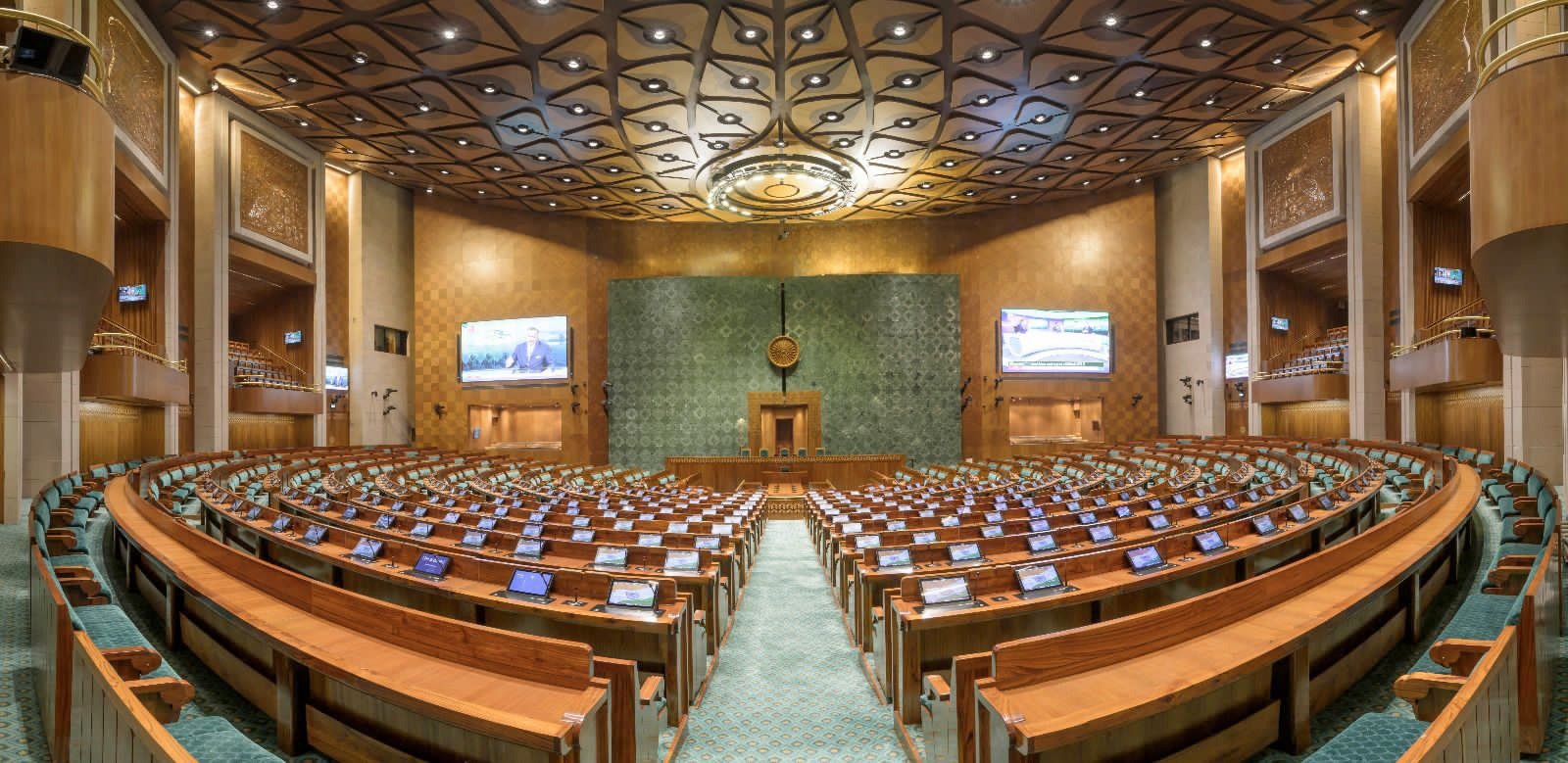
Every year, Parliament convenes with a promise — to debate, to legislate, to represent. Every year, that promise gets tested. The Monsoon Session of 2026 tested it more than most, recording the lowest productivity in a decade. Here’s what happened, what it cost, and what it should teach us.
1. Why Parliament Sessions Exist in the First Place
Parliament isn’t a ceremonial gathering — it’s the working engine of Indian democracy. Three sessions a year (Budget, Monsoon, Winter) exist for very specific reasons: to make and amend laws, to approve the government’s budget and spending, and — perhaps most importantly — to hold the executive accountable through debates, discussions, and Question Hour. Every sitting day is a day when elected representatives are meant to stand up and answer for how the country is being run. That’s not a bonus feature of democracy. It is democracy, in its most functional form.
2. The Ruling Party and the Opposition: Two Roles, One Institution
A Parliament only works when both sides play their part. The ruling party’s job is to govern, to bring legislation, and to justify its decisions on the floor of the House. The Opposition’s job is not to obstruct for the sake of obstruction — it’s to question, scrutinize, propose alternatives, and represent the voters who didn’t vote for the government in power. Disagreement is not dysfunction; it’s the whole point. A Parliament without a questioning Opposition is a rubber stamp. But a Parliament where the Opposition’s only tool is disruption — not debate — fails just as badly. Both sides carry responsibility for what a session becomes.
3. Why a Functioning Parliament Matters — And What Happened This Time
The Monsoon Session 2026 ran for 19 days, from 20 July to 13 August. On paper, that’s three weeks of lawmaking. In practice, the Lok Sabha functioned for only 19% of its scheduled time, and the Rajya Sabha for 33%. Question Hour — the one slot specifically designed for MPs to hold ministers accountable — saw the Lok Sabh use just 1% of its allotted time, and the Rajya Sabha 12%. Of 419 starred questions
listed for answers, only 55 were actually taken up.
Even legislation didn’t get the scrutiny it’s meant to. 12 Bills were passed during the session, but 9 of the 12 went through with no MP other than the minister speaking on them at all. Combined, all 12 Bills received barely 33 hours of discussion — across both Houses, for the entire session. The one exception was the Public Examinations (Prevention of Unfair Means) Amendment Bill — tied directly to the NEET-UG paper leak controversy — which received close to 11 hours of debate in the Lok Sabha and over 6.5 hours in the Rajya Sabha. It was the only Bill treated the way all legislation is supposed to be treated.
This is what a non-functioning Parliament actually looks like: not an abstract inefficiency, but laws passing without debate, and citizens’ questions going unanswered.
4. The Cost — And Whose Money It Is
Running Parliament isn’t free. Estimates put the cost of operating both Houses at roughly ₹2.5 lakh per minute. When you multiply that by the 7,000+ minutes lost to disruption during the Monsoon Session, you get an estimated ₹175 crore — spent not on debate, not on legislation, not on answering citizens’ questions, but on adjournments, walkouts, and sloganeering.
That money is not the government’s, and it’s not the Opposition’s either. It’s public money — funded by every taxpayer, whether they’re following Parliament’s proceedings or not. When a session runs like this, the bill doesn’t disappear. It gets paid anyway, by people who had no say in whether the House chose to function or
not.
5. Can This Be Fixed? A Few Ideas Worth Debating
Parliament’s productivity problem isn’t new, and neither is the search for solutions. Some ideas worth putting on the table:
A minimum guaranteed debate time per Bill, so legislation cannot pass on the strength of a minister’s voice alone. Automatic deductions from MPs’ salaries and allowances for days lost to disruption they’re responsible for, similar to systems already discussed by some state legislatures. Live, publicly published productivity scorecards for every session — so citizens don’t have to wait for a valedictory address to know how their representatives spent their time. Pre-session agenda agreements between the ruling party and the Opposition, committing both sides to a fixed number of debate hours on contentious issues before the session even begins. Stronger anti-disruption rules within the House, with real, enforced consequences — not just suspensions that get walked back a few sittings later.
None of these are silver bullets. But the current system — where disruption has almost no cost to the people causing it, and every cost to the people funding it — clearly isn’t working either.
6. What This Should Teach Us — And Where Vote Mantra Stands
For young Indians, especially those still forming their understanding of politics, the Monsoon Session 2026 is a useful case study — not because of who was right, but because of what got lost. It’s a reminder that democracy isn’t just about who wins an argument; it’s about whether the argument happens at all. Watching how Parliament functions — not just what results it produces — is one of the most underrated forms of political literacy. A Parliament that debates loudly but constructively is healthy. A Parliament that shouts without listening is not, regardless of which side is doing the shouting.
At Vote Mantra, we don’t take sides on who’s to blame for a particular session — that blame game between the ruling party and the Opposition happens every single year, almost on schedule. What we do take a side on is this: accountability shouldn’t be optional, and public money shouldn’t fund political theatre. Whether it’s the government avoiding scrutiny or the Opposition avoiding debate, the outcome for the citizen is the same — fewer answers, less legislation examined properly, and a larger bill at the end of it.
Our stand is simple: Indians, especially young Indians, deserve to know exactly how their Parliament — and their money — is being spent. Not in a decade-end retrospective, but session after session, in real time. That’s the only way disruption stops being cost-free for the people causing it.
— Vote Mantra | Professionally Political